
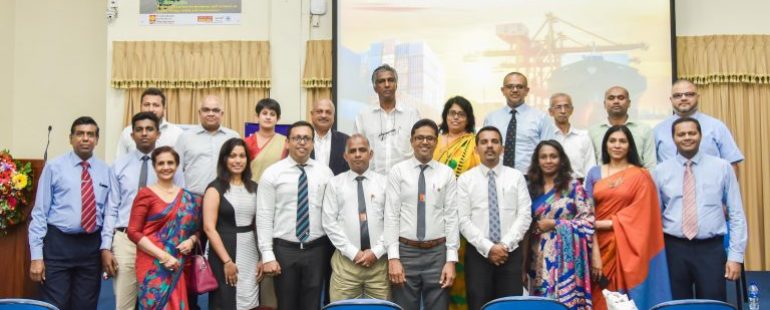
Chartered Institute of Logistics and Transport Sri Lanka (CILT) in partnership with PIM Alumni Association (PIMA) of the Postgraduate Institute of Management , recently concluded
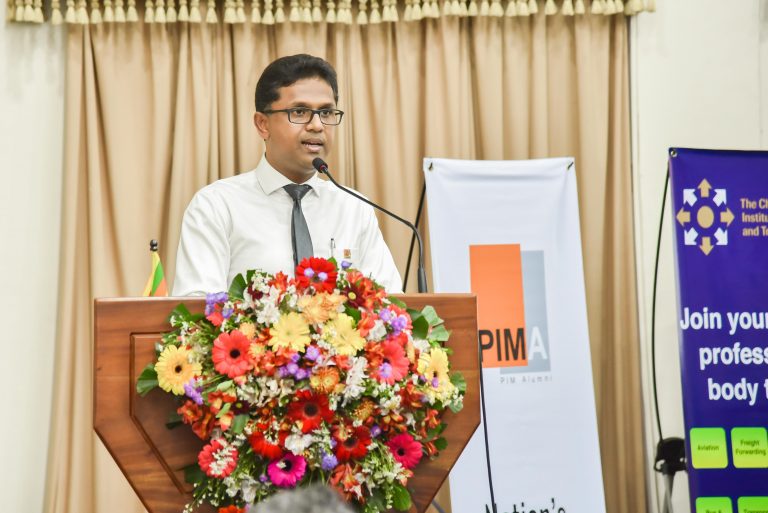
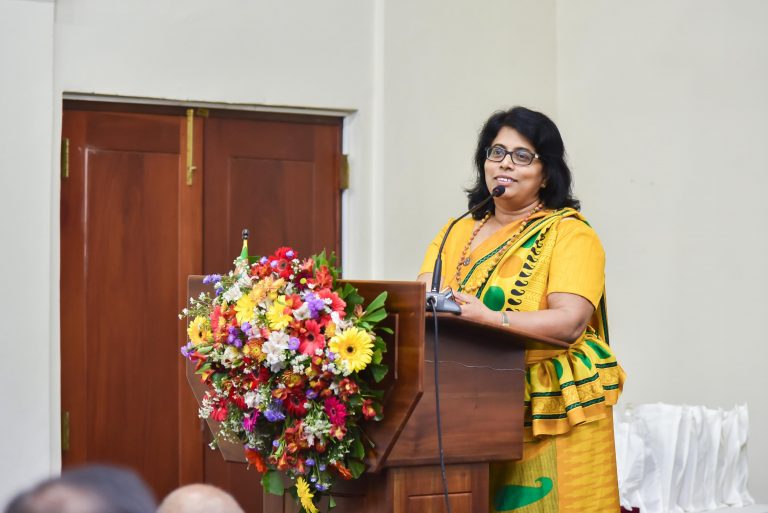
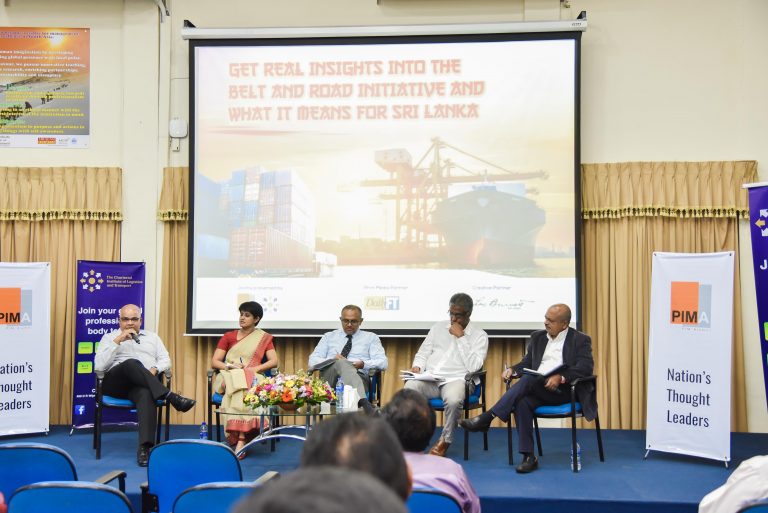
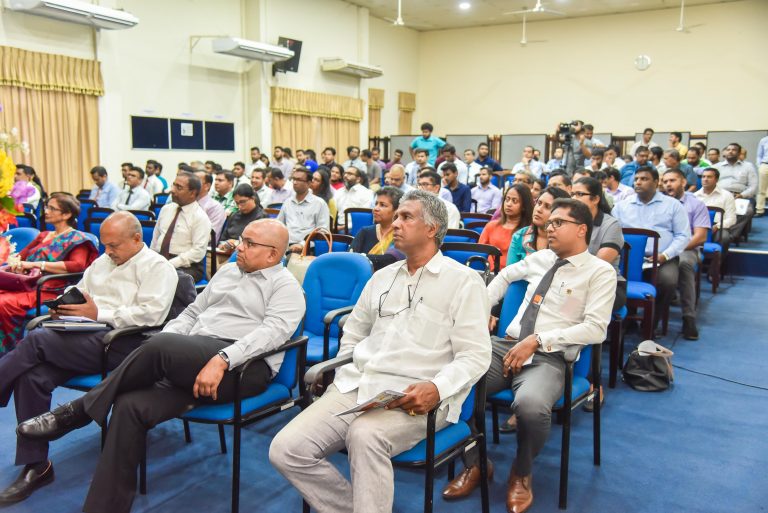
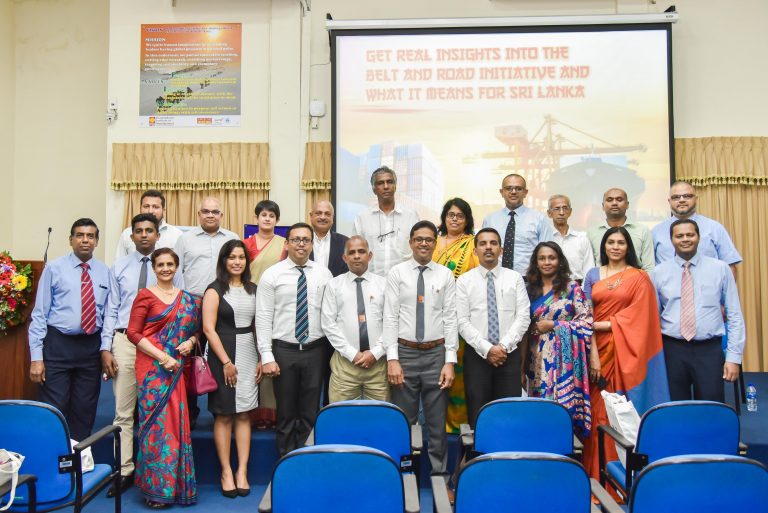
a successful event on Belt and Road Initiative (BRI) and its impact to Sri Lanka at the PIM Auditorium, with a large gathering of Professional and academic enthusiasts. The participants were truly interested in this topical discussion, which is highly relevant to Sri Lanka at this juncture being at the center of the Belt part which, is the sea route of the Belt and Road initiative. President PIMA Dinesh Hamangoda in his welcome address thanked PIMA and CILT for coming together to organize an event of this nature for the benefit of both PIM alumni and CILT membership. Chairperson CILT SL Gayani de Alwis, CMILT who is a PIM Alumni also, mentioned in her speech that it is important to create a discourse on issues of public interest and thanked PIMA for partnering with CILT and assured that both parties will continue this event in their annual calendar.
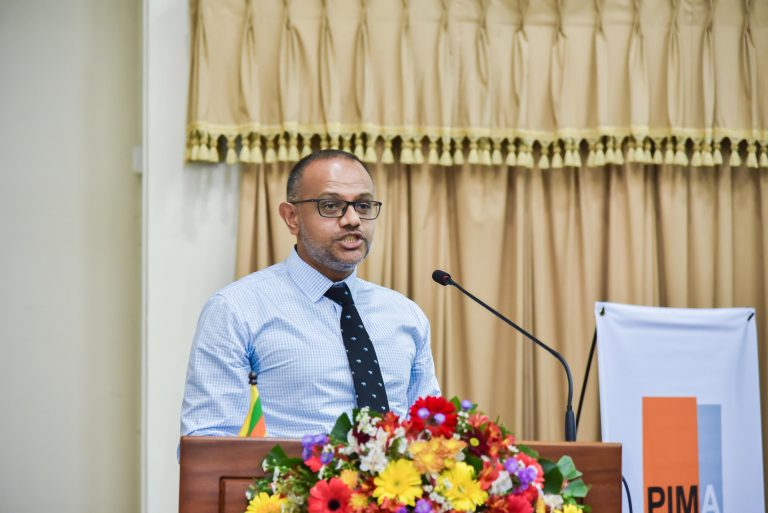
Key note speech was given by Dr Janaka Wijesiri, The Research fellow IPS. Distinguished Panel were Mr Romesh David, FCILT, CEO South Asia Gateway Terminal (SAGT) and International Vice President CILT, Mr Diren Hallock, Chairman/Managing Director DRH logistics international (Pvt ) ltd , Ms Subashini Abeysinghe , Research Director Verite Research. Panel Discussion was moderated by Mr Nisthar Cassim , the Editor Daily FT.
Key note Speaker Dr Janaka Wijesiri, highlighted five major objectives of the present BRI initiative, and those were policy coordination, connectivity, unimpeded trade, Financial Integration and people to people Exchange and Sri Lankan involvements in the BRI. The Belt and road initiative is a major thrust of the Chinese government, which is linking their trade routes between the Asia and the West through the Indian ocean.
Dr Wijesiri explained about Sri Lanka’s integration with China for the present FTA and highlighted the major projects and investments undertaken by them in the country. Under the people to people exchange, he pointed that the frequent influx of Chinese travellers under the cultural and academic sectors. He further reiterated the objective of this BRI and how Sri Lanka’s geographical location can be utilized under the maritime route, and showed that the major BRI connected projects in the country such as the Colombo International Port City Project, the Hambanthota Port Development and the adjoining Industrial estate as well as the Colombo Port expansion etc are of vital Importance to the country.
He also mentioned the following benefits that Sri Lanka could derive through BRI:
- Higher Trade flows
- Attracting foreign direct investments
- Hard and soft infrastructure development
- Opportunity to become the economic Hub in the Indian ocean.
- Possible integration of Sri Lank to Global Value Chains
- Growth in Tourism
- Technology and Knowledge transfer
- Employment opportunities
He stated that concerns of risks involved will be to balance and strengthen the relationship and the rivalry between India and China. The concern over Sri Lanka’s autonomy and the independence and the Possible lower Investment return was also highlighted. Another area was the public perception and opposition connected with possible sustainable growth.
Romesh Davidin his speech highlighted the whole scenario of BRI in a positive sense . He stated that he could see that BRI is focused in the Central Asian Region and for Example , the Kazakhstan is having a major Impact in the Central Asian Region He stated that Sri Lanka will have a tremendous Impact and opportunity with greater diversity to become a major trading Hub as part of BRI. Further highlighting the Central Asian region developments through BRI, having Pakistan through the corridor has given tremendous opportunity to China. He stated that China and India are great markets and we got the opportunity to reach both markets and Sri Lanka could play a pivotal role and could supply products to each other and will create connectivity. He also mentioned that the Hambanthotha port was not part of BRI originally since the BRI initiative was initiated in 2013 and whereas the Hambanthota Port initiation was in year 2007.
Diren Hallock during his presentation highlighted that , as he observed China truly requires the Indian Ocean, since China is mainly concerned for their Energy and Security . He pointed out that since China has been excluded by other partners, they wish to transport and carry bulk transports, energy requirements through the Indian Ocean. The biggest challenge that the Sri Lankans will face will be to balance India and China and to establish a moderate relationship in the area of maritime security . One major factor will be to establish data communication line, which will go through Sri Lanka. He further stated that Sri Lanka has failed to handle matters in a diplomatic manner and cautioned Sri Lanka to handle India well , to manage geo political tension.
Subashini Abeysinghe,during her presentation viewed the whole BRI initiative in a balanced and transparent manner. Her comments on the BRI issue was that these Initiatives are not undertaken as a major concept of the Chinese Government and are Pre based BRI . Most of the time as per her observation that many of these large scale Investment Initiatives do not come directly through main Chinese Government, but many large scale companies and Provincial governments in China are involved. Several such Projects could be present under the Umbrella of BRI. She observed that most of these Investments are from different Agencies in China.
Further she stated the difficulties encountered in understanding the BRI Initiative in full and as well as the laid down Chinese policies due to language barrier. Most of the written articles are in Chinese Language and for a laymen it is difficult to understand, since the use of English Language is not frequent in China. She also noted the comments and concern in Sri Lanka about the debt burden which is discussed as a serious issue for Sri Lanka. She stated that there are notable factors for this challenge we face currently and factors such as our poor Public Debt management , Poorly selected Projects, Reckless Burrowing , lack of Transparency etc causing this problem. In general western countries shows the debt trap diplomacy, but we in Sri Lanka has graduated to become non-concessional Debt burrower. She said that It is due to our own faults and poor financial management, hence countries such as China could benefit from the current situation in Sri Lanka.
When asked about the debt crisis, she further said that, we owe much to international Finance institutions and financial markets and it was evident that the Sri Lankan debt has increased from 11% to 54% . In that sense there is nothing that we can do with China regarding our own debt crisis. The Chinese debt also has now increased from 2% to 9%. The factor to note is that what we burrow from International markets are quite expensive. Sri Lanka burrows at 6% from international markets with a maturity period of 7 years and we could burrow at 2% from China with a maturity period of 20 years. This factor will make burrowing from china more appealing for the Sri Lankan government.
Another valid point under the BRI initiative will be that China is concerned about their energy security but they want close friendships and loyalty with countries in the region and they wish to see a Chinese dominant South Asian region as their Global ambition and certainly they do not wish to see the region with Western or Japanese Dominance. As such China is negotiating with countries such as Singapore. Another observation she made was that the Chinese Institutions do not have hard and fast rules, and even through the BRI China has not spelled any political aspirations as well. It was argued that the competition setup made by China may be hurting other countries in the world.
During the discussion, while appreciating the Belt and Road Initiative by China and what it matters to our country, it was argued that Sri Lanka will have multiple benefits through the Operation. Further the management of diplomatic relations of these two Asian giants, China and India as our close friend and ally will be of much importance for the expected growth and sustainable development in the BRI initiative.
The Chartered Institute of Logistics and Transport is a leading global professional body associated with the logistics, transport and supply chain industry. CILT is celebrating its Centenary year this year. The Institute holds unparalleled international recognition and works towards achieving its objectives of promoting and encouraging the art and science of logistics and transport through its membership and its educational qualifications. CILT is celebrating “Centennial,” this year. with a global membership of over 35,000 in 35 countries across the globe, CILT provides a professional identity to those in the ever expanding logistics and transport sector. It is a strong, active and a unified professional body that is able to speak with authority on strategic issues related to transport and logistics.
Comments (No Responses )
No comments yet.